





Questions
Asking Questions
Asking yes-or-no and who, what, where, when, why and how questions.
- Mastered by
- ASHA places one- and two-word questions like "What's that?" in the 1-to-2-year band
- Practice items
- 60
- Sections
- 7
Play it
Each one opens full screen, already set to this skill.
The rule, explainedShow ↓Hide ↑
A question asks for something you want to know.
A yes-or-no question starts with a helping word like is, can or do: Is it raining? Can I play?
Other questions start with who, what, where, when, why or how, and the helping word usually comes right after: Where is the dog?
When who or what is the one doing it, the words stay in order: Who made the cake?
- The dog is sleeping. Is the dog sleeping?
- Where are my shoes?
Watch for: "Where you are going?" with the helping word left in place, or a question asked only by making the voice go up ("You like it?"). Both are normal on the way in.
What this skill is
Asking a question is how a child gets information, help and a turn. A good question needs two things: the right question word for what you want to know, and the right word order. Yes-or-no questions start with a helping word - is, can, do, will - and wh- questions start with who, what, where, when, why or how, usually with the helping word right after it ("Where is the dog?"). When who or what is the one doing the action, nothing moves: "Who made the cake?" English hides the hard part in that small helping word: "The dog is sleeping" becomes "Is the dog sleeping?", and "You like it" needs a "do" that was not there at all.
What to expect
Toddlers ask with their voice: "Daddy go?" with the pitch going up. Next come what and where, often with the helping word missing or left in place - "Where Daddy going?" or "Where Daddy is going?". Yes-or-no questions get the helping word moved to the front first; wh- questions catch up a little later. Why, when and how come last, and "why" often arrives as a game of asking it about everything.
Try this at home
When to refer
Put it into practice
Tap any item below to open it full screen, one at a time, so a child can answer without reading the answer first.
These activities are a starting point, not the practice itself. A structured task is a good way to introduce a form and to find out whether a child has it yet. What actually moves it into everyday speech is using it in the real world and in ordinary play — which means the four things below matter more than finishing the list.
Recast
Say their sentence back correctly, without asking them to repeat it. Child: “he goed.” You: “he went! Where did he go?”
Expand
Add one or two words to what they said and hand it back. Child: “big truck.” You: “a big red truck!”
Simplify what you ask
Cut a long instruction into single steps and say them in the order they happen, rather than repeating the long one louder.
Follow their lead
Use whatever they are already playing with. A form practiced on something they chose is the one that shows up again tomorrow.
Yes or No Questions
9 itemsRead what is happening. Ask a question that can be answered yes or no. Start with is, are, can or do. Tap any item to open it full screen.
What and Where Questions
10 itemsRead what is happening. Ask a question that starts with what or where. Tap any item to open it full screen.
Who Questions
7 itemsRead what is happening. Ask a question that starts with who. Tap any item to open it full screen.
When, Why and How Questions
9 itemsRead what is happening. Ask a question that starts with when, why or how. Tap any item to open it full screen.
Turn It Into a Question
10 itemsRead the sentence, then say it as a yes-or-no question. Move the little word to the front, or start with do or does. Tap any item to open it full screen.
Fix the Question
7 itemsThis question has its words in the wrong order. Say it the right way. Tap any item to open it full screen.
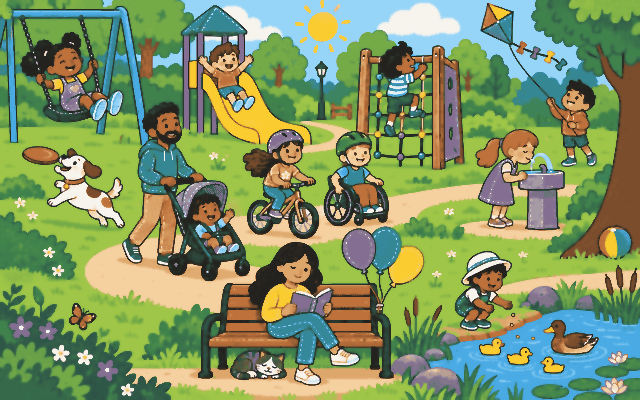
Ask About the Picture
8 itemsLook at the park picture. Ask the question. Tap any item to open it full screen.